Protein Bars: The Perfect Fusion of Health and Taste
In the fast-paced world we live in, the perfect combination of health and taste is a goal pursued by many. To meet this demand, protein bars have emerged as a convenient, quick, and nutritionally rich snack. Today, we will delve into the details of this delicious and nutritionally abundant indulgence, taking you on a journey to discover the charm of protein bars.
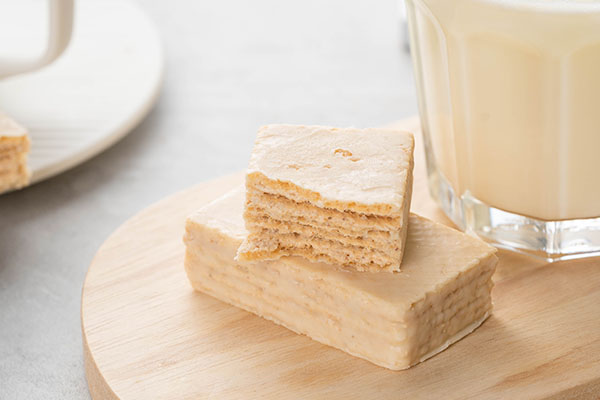
The primary component of protein bars is protein, with common sources including whey protein, casein protein, soy protein, and others. Carbohydrates are also crucial components, derived from oats, fruits, whole grains, providing energy and enhancing texture. Additionally, the fat content in protein bars is generally low, often sourced from nuts and vegetable oils. Furthermore, protein bars may incorporate certain food additives such as sweeteners, thickeners, preservatives, enhancing the taste, stability, and shelf life of the bars.
To reduce the calorie and sugar content of protein bars, many use sugar substitutes to enhance sweetness, such as sorbitol, Isomaltitol, erythritol, and others. However, the taste of these sugar substitutes may not be suitable for everyone, and some individuals may even experience digestive discomfort after consumption.
The essential nutrients found in protein bars—such as proteins, carbohydrates, fats, vitamins, and minerals—contribute significantly to our overall health. They play a crucial role in supplementing protein intake, providing energy, managing weight, and boosting immune function. Additionally, protein bars come in a variety of enticing flavors, including chocolate nut, cocoa brownie, lemon, caramel macchiato, sea salt cheese, matcha dark chocolate, and butter cookie, catering to the diverse taste preferences of consumers.
The Global Protein Bar Market: Rapid Growth and Tremendous Potential
In an era focused on health, the popularity of protein bars is steadily rising due to an increasing number of people participating in fitness and sports activities. In recent years, the global protein bar market has shown a trend of rapid growth, with the market size expanding year by year, and is expected to continue this growth trajectory in the coming years. Among these, the Asia-Pacific region stands out as the fastest-growing area, witnessing significant success for various protein bar brands in this region [1]. With Asia's increasing influence on the protein bar market, the market potential and product innovation in countries like China are continually on the rise.
According to reports, the global protein bar market reached a size of $3.4 billion in 2022, and it is projected to reach $5.5 billion by 2028, with a compound annual growth rate (CAGR) of 8.35% between 2022 and 2028 [2]. As the world's second-largest economy, China's market size is expected to reach $1.7 billion by 2030, growing at a CAGR of 9.6% during the analytical period from 2022 to 2030. Other notable regional markets include Japan and Canada, which are expected to grow by 3.2% and 4.9%, respectively, between 2022 and 2030. In Europe, Germany's estimated average compound growth rate is approximately 4.1%. With increasing demand for protein bars in various sectors such as sports nutrition and meal replacements, it is anticipated that the global protein bar market will reach $7.4 billion by 2030 [3].
Novel Food Ingredient – Yeast Protein
Protein's significance to the human body is self-evident, serving as a crucial component in the formation of human tissues and organs. To maintain bodily health, it is essential to ensure an adequate daily intake of protein. Currently, both per capita protein demand and global protein consumption are on the rise annually. With the increasing global population and insufficient supply of traditional proteins, a substantial "protein gap" is anticipated. Therefore, the development of sustainable alternative proteins or supplements proteins has become a hot research topic.
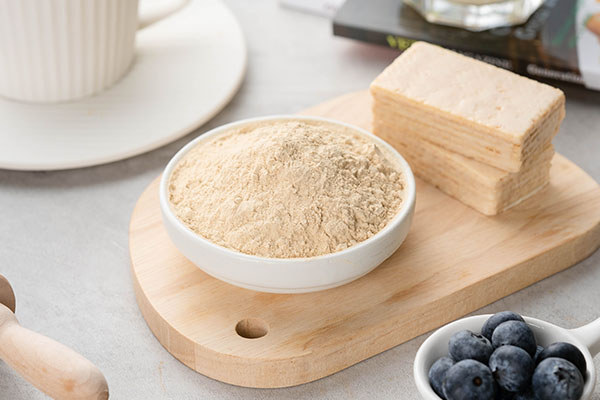
Yeast protein, derived from brewing yeast through a series of processes such as enzymatic hydrolysis and extraction, is a novel microbial protein with a protein content exceeding 80%. It holds promise as a new supplementary protein for food applications. As early as 1977, the U.S. FDA approved yeast protein from bread yeast as a protein nutritional supplement for use in food. In the same year, the EU also approved yeast protein obtained through conventional physical and enzymatic methods as a novel food. On December 1, 2023, yeast protein was included in the new food ingredient catalog by the National Health Commission of China.
Yeast protein is environmentally friendly and sustainable, featuring a short production cycle, low carbon emissions, and minimal need for extensive farmland, aligning with the principles of green development. Its production is stable, unaffected by seasons, climate, or genetic modification, making it suitable for industrial-scale production. Additionally, yeast protein boasts high nutritional value, with a comprehensive and balanced amino acid profile. Notably, lysine, the first limiting amino acid in cereal proteins, is also found in high levels in yeast protein. Its amino acid ratio is close to the ideal values recommended by the Food and Agriculture Organization of the United Nations [4]. A comparison of amino acid score (AAS) and digestible indispensable amino acid score (DIAAS) between yeast protein and animal proteins (whey protein concentrate, whey protein isolate) and plant proteins (wheat protein, pea protein) is presented in Tables 1 and 2. According to AAS, yeast protein surpasses plant proteins like soy protein and is comparable to whey protein. In terms of DIAAS, yeast protein slightly lower than whey protein and better than plant proteins.
Table 1: Amino Acid Score (AAS) for Different Proteins
FAO Model,mg/g, 2011 | AAS (>3 years old) | ||||||
Whey Protein Concentrate | Whey Protein Isolate | Soy Protein | Yeast Protein | Wheat Protein | Pea Protein | ||
Histidine | 16 | 150.2 | 161.9 | 202.2 | 204.3 | 160.6 | 164.2 |
Isoleucine | 30 | 218.3 | 241.6 | 169.2 | 224.4 | 130.9 | 160.6 |
Leucine | 61 | 181.5 | 191.3 | 131.9 | 161.7 | 112.5 | 126.6 |
Lysine | 48 | 168.2 | 166.6 | 99.5 | 156.7 | 31.6 | 128.8 |
Methionine + Cysteine | 23 | 220.1 | 224.2 | 110.5 | 136.7 | 74.0 | 73.0 |
Phenylalanine + Tyrosine | 41 | 211.1 | 242.9 | 271.7 | 300.8 | 268.3 | 243.9 |
Threonine | 25 | 305.2 | 289.4 | 170.8 | 228.6 | 123.7 | 159.9 |
Tryptophan | 6.6 | 309.2 | 269.4 | 216.9 | 228.6 | 138.0 | 134.8 |
Valine | 40 | 155.9 | 167.9 | 124.8 | 175.3 | 105.8 | 125.9 |
Table 2 Digestible Indispensable Amino Acid Score (DIAAS) of Different Proteins
FAO Model, 2011 | DIAAS (>3 years old) | |||||
Whey Protein Concentrate | Whey Protein Isolate | Soy Protein | Yeast Protein | Wheat Protein | Pea Protein | |
Histidine | 116.31 |
yeast protein,AngeoPro,protein bar
Tag terkait:
Terkait Blog
| ||||